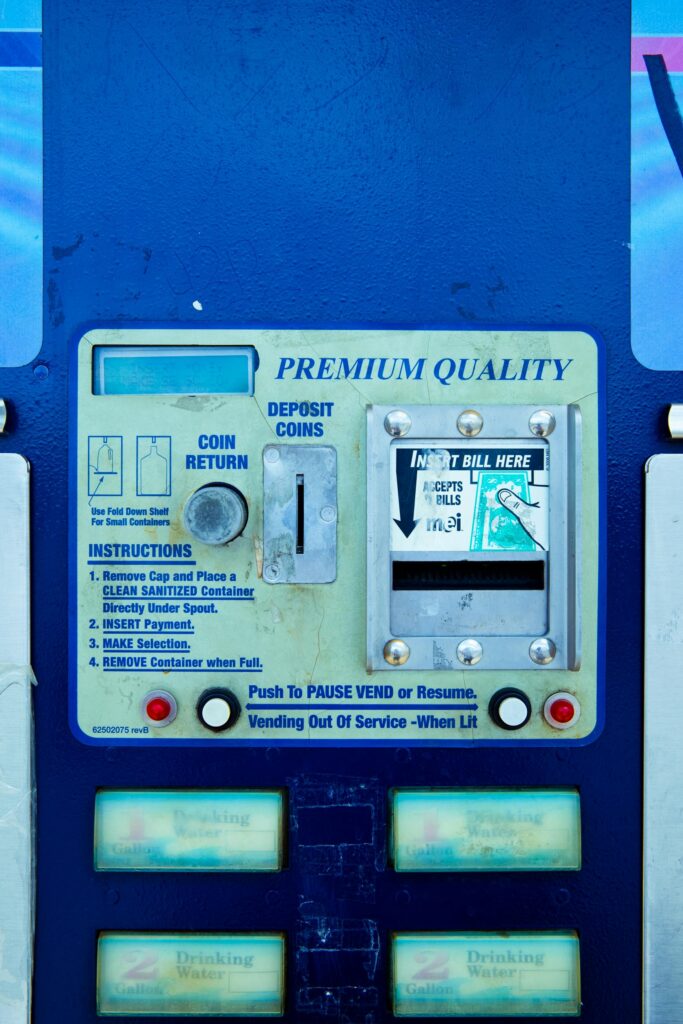
For decades, vending machines have been a familiar part of workplaces, gyms, schools, and waiting rooms. Most people hardly notice them anymore — they sit in the corner, accept cash or cards (sometimes), and provide a quick snack or drink when needed.
But behind the scenes, vending technology has begun to change in ways many businesses haven’t fully recognized yet.
What was once a simple snack machine is slowly evolving into something closer to automated retail.
The Era of Traditional Vending
Traditional vending machines were built around a straightforward concept: stock products, collect payments, and refill when inventory runs low.
For years, this model worked well enough. Machines operated independently, service routes were scheduled manually, and owners relied largely on experience to decide what products to stock.
However, traditional systems often come with challenges that businesses and operators have quietly accepted as normal:
- Machines running out of popular products
- Limited payment options
- Service calls only after problems occur
- Little visibility into purchasing trends
- Manual inventory checks
None of these issues are catastrophic — but together, they create inefficiencies that add up over time.
The Shift Toward Smart and AI-Enabled Vending
In recent years, vending technology has started adopting tools commonly seen in other industries: cloud connectivity, digital payments, and data analytics.
Modern smart vending machines can now monitor inventory levels automatically, report maintenance needs before failures occur, and support fully cashless transactions.
From a user’s perspective, the experience feels simple:
Tap a card or phone.
Make a selection.
Move on with your day.
Behind that simplicity, however, machines are collecting operational data that helps improve reliability and product availability.
Rather than guessing what customers want, operators can adjust offerings based on actual purchasing behavior.
A Different Approach to Maintenance and Service
One of the biggest differences between traditional and AI-enabled vending isn’t visible to customers at all.
Historically, vending service followed a reactive model — machines were checked on a schedule or serviced after an issue was reported.
Smart vending introduces a more predictive approach.
Machines can alert operators when:
- inventory runs low,
- temperatures fluctuate,
- payment systems experience issues, or
- maintenance may soon be required.
This reduces downtime and helps ensure machines remain consistently operational without constant manual oversight.
Changing Expectations in the Workplace
Workplaces themselves have also changed.
Employers increasingly look for small amenities that improve employee experience without adding administrative burden. Breakrooms, lounges, and waiting areas are now viewed as extensions of company culture rather than purely functional spaces.
Convenience matters more than ever, especially as cash usage declines and employees expect mobile-friendly payment options in everyday transactions.
In many ways, vending modernization reflects broader shifts already happening in retail and hospitality — automation supporting convenience rather than replacing human interaction.
Traditional vs. Smart Vending at a Glance
| Area | Traditional Vending | Smart / AI Vending |
|---|---|---|
| Inventory Management | Manual checks | Real-time monitoring |
| Payments | Cash-focused | Cashless & mobile |
| Service Model | Scheduled visits | Data-informed servicing |
| Product Decisions | Operator guesswork | Purchase analytics |
| Downtime Risk | Higher | Reduced |
What This Means for Local Businesses
Across Muskegon County and West Michigan, many businesses still operate reliable traditional machines — and for some environments, they continue to serve their purpose well.
At the same time, newer systems are offering an alternative approach focused on efficiency, convenience, and adaptability.
The transition isn’t happening overnight, nor does it need to. Like many technologies, adoption tends to occur gradually as businesses evaluate what best fits their employees and customers.
What’s clear is that vending, once considered static infrastructure, is becoming more dynamic and responsive to modern expectations.
Looking Ahead
Automation continues to reshape industries in subtle ways. Vending may not be the most obvious example, but it represents a broader trend toward unattended retail — systems designed to operate reliably while requiring less day-to-day management.
For businesses, the conversation is shifting from simply having vending machines to considering how those machines contribute to workplace convenience and experience.
And for many people grabbing a drink during a busy day, the biggest change may simply be that the machine works exactly when they expect it to.
Written by Muyskens Group LLC, a locally owned vending solutions provider serving Muskegon County and West Michigan businesses.